Dental-Skeletal-Retinal Anomaly (DSRA)
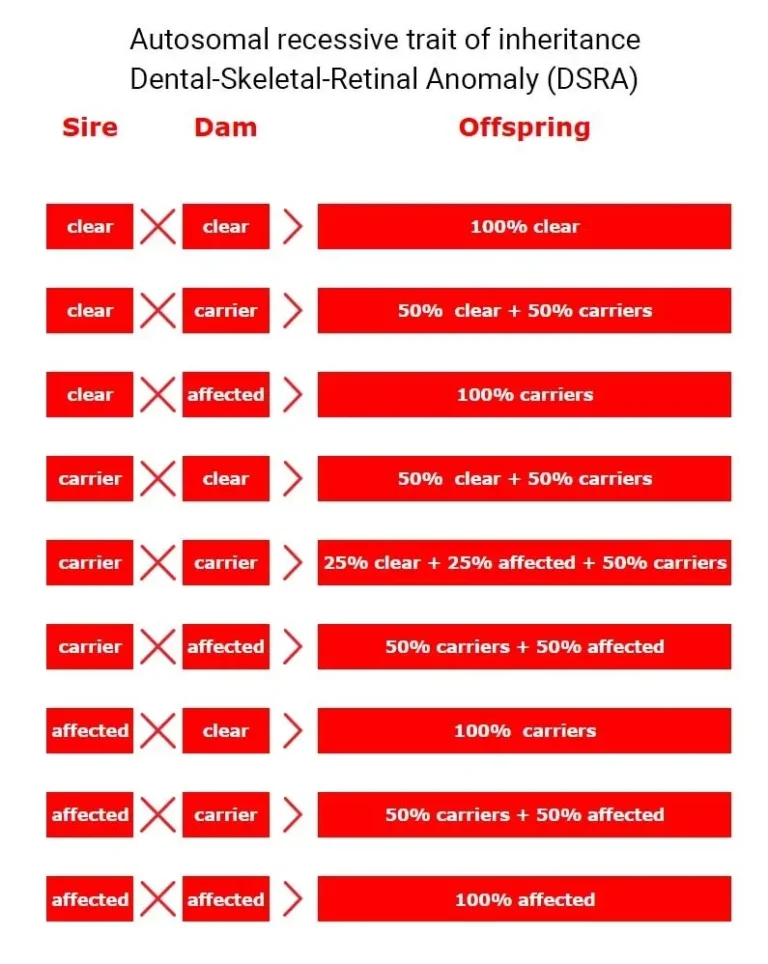
Dental-Skeletal-Retinal Anomaly (DSRA) is a hereditary syndrome identified within the Cane Corso breed that affects the development of the teeth, skeleton and eyes. The condition is caused by a mutation in the MIA3 gene and is inherited in an autosomal recessive manner, meaning that an affected dog must inherit two copies of the mutation—one from each parent.
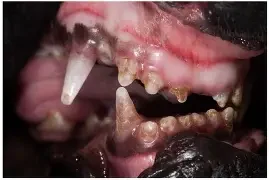
Dogs affected by DSRA may exhibit a range of clinical signs, including abnormal tooth development, retained deciduous teeth, missing or malformed permanent teeth, skeletal abnormalities affecting growth and limb development, and progressive retinal degeneration that can result in visual impairment or blindness. The severity of symptoms can vary between affected individuals, with some dogs displaying more pronounced signs than others.
One of the most significant aspects of DSRA is its impact on retinal health. Affected dogs may develop progressive degeneration of the retina, the light-sensitive tissue at the back of the eye responsible for vision. Early signs may include difficulty seeing in low-light conditions, reduced visual awareness and progressive vision loss over time.
Research into DSRA has provided the Cane Corso community with an important genetic testing tool, allowing breeders to identify Clear, Carrier and Affected dogs. This has enabled more informed breeding decisions and offers a practical means of reducing the incidence of affected puppies while preserving valuable genetic diversity within the breed.
As DSRA is inherited in an autosomal recessive manner:
• Clear dogs possess two normal copies of the gene and cannot pass the mutation to their offspring.
• Carrier dogs possess one normal copy and one mutated copy of the gene. Carriers do not typically develop DSRA but can pass the mutation to their offspring.
• Affected dogs possess two copies of the mutation and are at risk of developing the condition.
Responsible use of genetic testing allows breeders to avoid producing affected puppies without unnecessarily removing carriers from breeding programmes. Through continued health testing, responsible breeding practices and health reporting, the Cane Corso community can work together to reduce the impact of DSRA and protect the long-term health of the breed.